
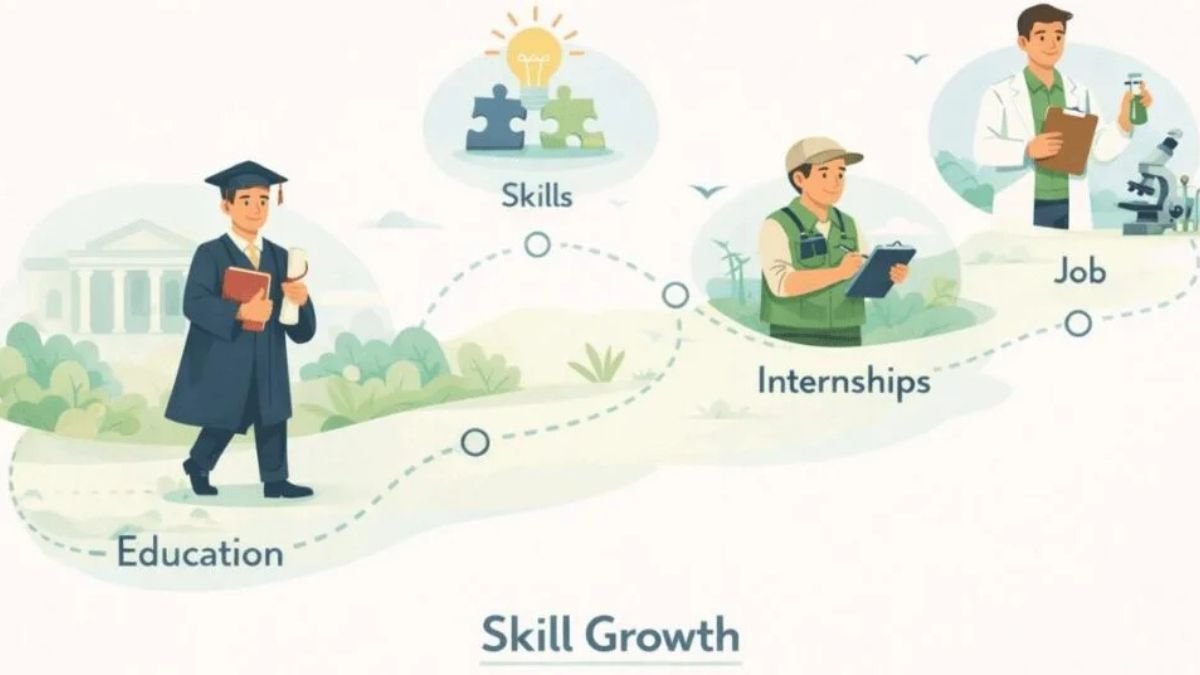
Environmental careers have rapidly transformed from niche opportunities into major professional pathways as the world increasingly recognizes the urgency of climate change, sustainability, and conservation. For students who feel inspired to protect the planet, the journey from high school to a full-time job in the environmental sector can be both rewarding and impactful. This roadmap provides a clear, humanized guide to help young learners understand how to turn their interest into a meaningful career.
Discovering Your Passion in High School
High school is the perfect launching pad for students who want to explore environmental careers. At this stage, passion is often shaped by early experiences such as nature clubs, science fairs, or community clean-up drives. Students begin noticing the issues that matter most to them, such as wildlife protection, pollution control, renewable energy, or climate activism. Coursework in biology, chemistry, earth sciences, and geography begins to form the academic foundation needed later on. Many students also participate in eco-friendly school projects, environmental debates, or sustainability campaigns, which strengthen their sense of purpose. These early explorations help them identify whether they see themselves working outdoors, engaging in research, designing solutions, or shaping environmental policies in the future.
Choosing the Right College Program
After building a basic understanding in high school, the next step is selecting an ideal college degree. Most students choose programs like Environmental Science, Environmental Engineering, Ecology, Forestry, Marine Biology, Geography, or Sustainability Studies. The choice of degree often reflects the specific interests developed during earlier years. A student fascinated by oceans may pursue marine biology, while someone drawn to solving large-scale pollution problems may find engineering a better fit. College is also a period when practical learning becomes crucial. Internships, laboratory work, climate research programs, and environmental field trips allow students to see how real-world ecosystems function. This blend of theory and experience creates a strong academic backbone and helps students understand the direction their future career may take.
Building Skills and Gaining Real-World Experience
While college education provides knowledge, it is the hands-on experience that truly prepares a student for the environmental job market. Internships at research institutes, government agencies, or conservation NGOs introduce students to field surveys, lab experiments, data analysis, and sustainability planning. Many students also join eco-organizations or volunteer for environmental campaigns, which helps them develop leadership, teamwork, and communication skills. Participation in workshops and seminars further sharpens their understanding of environmental challenges and emerging technologies. These real-world experiences build a professional portfolio and often influence the student’s specialization, whether it is renewable energy, conservation, waste management, climate research, or environmental policy.
Exploring Specialized Career Paths
As students progress toward graduation, choosing a specialization becomes essential. Environmental careers are incredibly diverse, and students can choose from research-driven, field-based, engineering-focused, or policy-oriented roles. Some students may become environmental scientists who conduct surveys, monitor ecosystems, and analyze environmental data. Others might find their passion in environmental engineering, designing solutions like water treatment systems, green infrastructure, and pollution-control technologies. There are also opportunities in wildlife conservation, climate change analysis, sustainability consulting, and environmental law. With growing global interest in renewable energy, careers related to solar, wind, and hydropower technologies are also expanding rapidly. This stage allows students to align their talents with real-world environmental needs and begin shaping their professional identity.
Entering the Workforce and Starting an Environmental Career
The transition from student life to full-time employment is a major milestone. Environmental graduates typically find opportunities in government agencies, research institutes, environmental consulting firms, NGOs, renewable energy companies, and corporate sustainability departments. Many organizations now prioritize sustainability goals and require experts who understand environmental regulations, conservation strategies, and climate responsibilities. New professionals begin their careers working on field assessments, environmental audits, habitat restoration projects, climate reports, energy-efficiency planning, or environmental impact assessments. The first job often acts as a learning platform where students apply their academic knowledge, gain professional confidence, and expand their network within the industry.
Conclusion
An environmental career roadmap from high school to a professional job is more than just an academic journey; it is a dedicated path toward creating a cleaner, healthier, and more sustainable world. Students begin with curiosity in high school, nurture it through focused college education, strengthen it with skill-building experiences, and ultimately convert it into impactful work. The environmental sector continues to grow, offering young people immense opportunities to protect ecosystems, innovate solutions, and influence global sustainability. For any student passionate about the planet, this roadmap provides a meaningful direction to turn their commitment into a lifelong career that benefits both society and the environment.
